
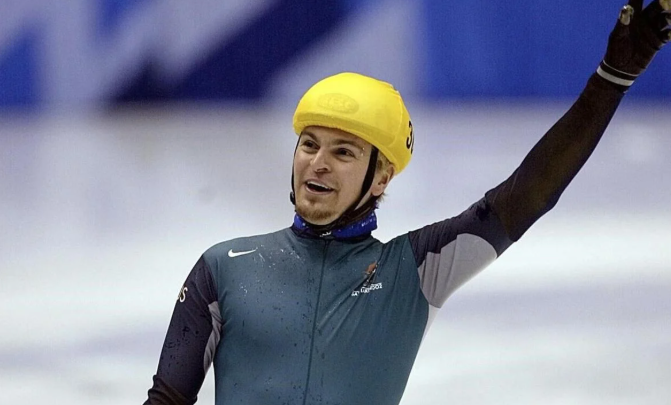
Steven Bradbury was in last place as the skaters entered the final bend of the men’s 1,000-metre short-track speed skating final at the 2002 Winter Olympics. When the four men ahead of him collided and fell, he had enough room to skate around them and cross the line first, winning Australia’s first Winter Olympic gold medal.
The injuries that nearly ended his career
Bradbury had already made Olympic history in 1994, when he helped Australia win its first Winter Olympic medal, a bronze in the 5,000-metre relay at Lillehammer. Later that year, another skater’s blade sliced into his right thigh during a race in Montreal. The injury required 111 stitches and kept him out of competition for 18 months.
He returned to racing, only to break two vertebrae in his neck in a training crash in 2000. A doctor advised him against skating again, but Bradbury returned to the ice and earned a place on Australia’s team for Salt Lake City.
Why Bradbury hung back in the final
Two races had already turned in Bradbury’s favour before he reached the final. He crossed the line third in his quarter-final, with only two skaters due to advance, and moved up when Canada’s Marc Gagnon was disqualified. In the semi-final, a late collision involving defending Olympic champion Kim Dong-Seong cleared a path for Bradbury to reach the medal race.
In the final, Bradbury deliberately stayed behind the pack, giving himself room to react if anyone fell. The other four were still fighting for the lead when they came together on the last bend. As they slid across the ice, Bradbury went around them and crossed the line. American Apolo Anton Ohno recovered to take silver, and Canada’s Mathieu Turcotte claimed bronze.